
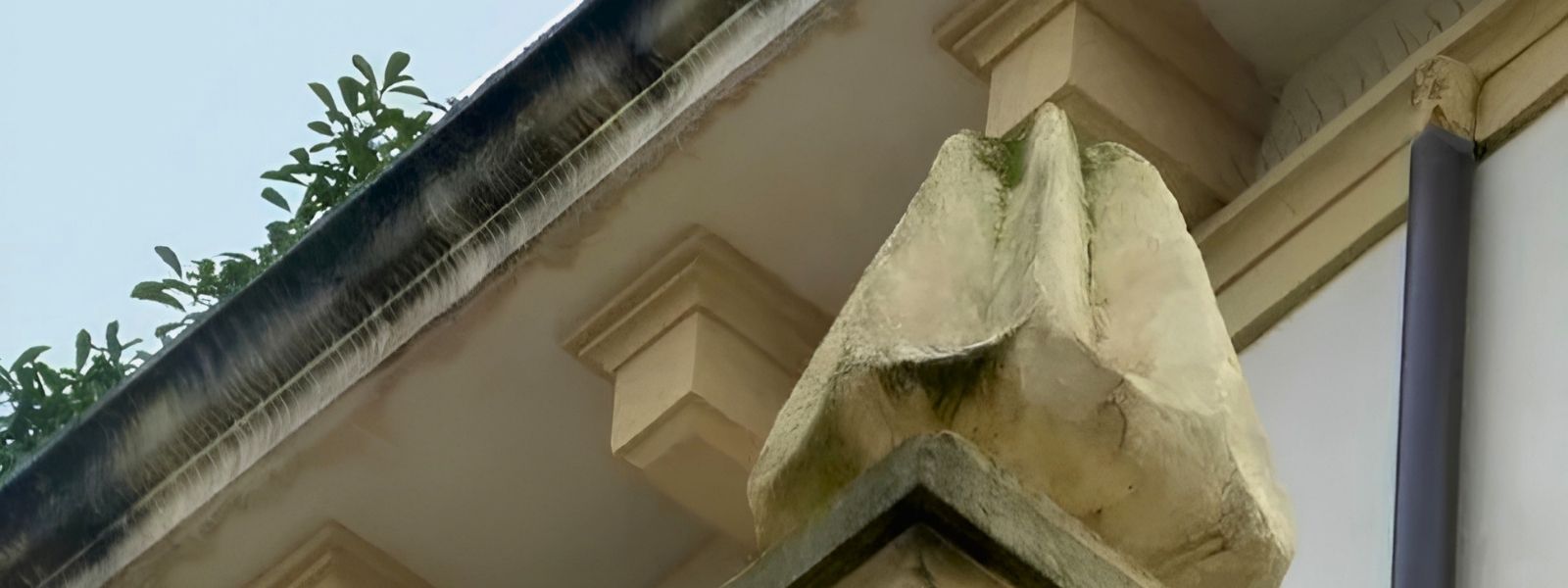
In the collective imagination, Verona is a city that lives on primarily through its most famous landmarks: the Arena, Juliet’s House, Piazza delle Erbe, the bridges over the Adige, and those cobbled alleyways that have helped build its reputation as a romantic and elegant city.
Yet, alongside this better-known and much-photographed Verona, there exists another, quieter and less talked-about side. This is the 20th century Verona, a place of reconstruction, urban expansion, modern architecture and buildings which, with their more austere lines and less decorative materials, have accompanied the city’s transformation over the course of the last century.
To speak of a true ‘Brutalist Verona’ might be an exaggeration, at least if one means Brutalism in its purest and most monumental form, consisting of large masses of raw concrete and urban complexes with a strong visual impact. Nevertheless, the city retains several examples of modern, post-war and Brutalist-inspired architecture that deserve attention, especially from those who enjoy discovering less conventional routes, photographing unusual urban landscapes and observing Verona off the beaten tourist track.
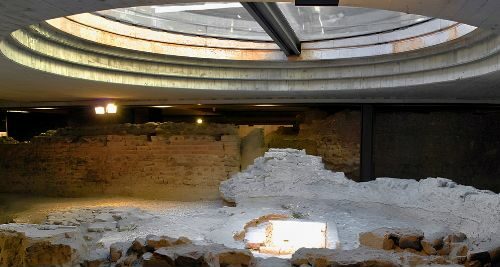
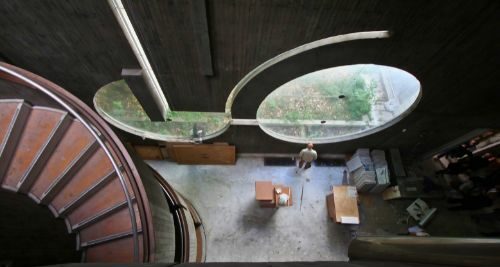
Between the station and the city centre: 20th-century Verona
One of the most interesting places to start is Corso Porta Nuova, an elegant and strategic boulevard, linking the station area to the historic centre. That is where Verona’s monumental heritage meets its more modern side, in a constant dialogue between the past and the present.
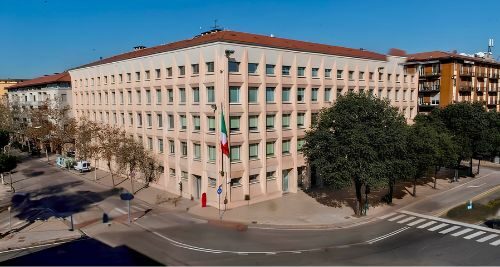
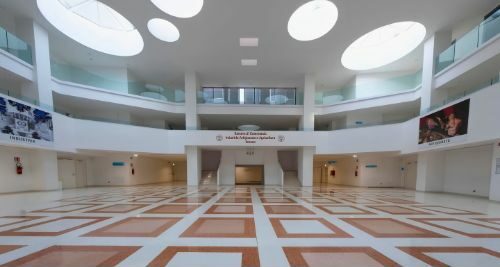
Among the buildings worth noting is the Verona Chamber of Commerce, designed by Libero Cecchini, a Veronese architect who was one of the leading figures in the reconstruction and urban transformation of the late 20th century.
The building is striking for its compact, institutional appearance, its use of local materials, and its relationship with Porta Nuova and the historic centre. It is not pure Brutalism, but it is a fine representation of that architectural period when Verona was seeking a balance between memory, function and modernity.
It is an interesting stop precisely because it is located in the main artery leading to the centre: many visitors pass through without stopping, but if you look closely, you will notice a different side of the city, one that is more urban and less touristy.
Reinforced concrete and bridges over the Adige
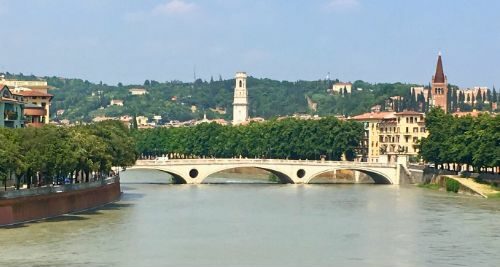
Another way to discover this alternative side of Verona is to look at the modern bridges over the river Adige. The river has always played a central role in the city’s history, but in the 20th century it also became the focal point around which new infrastructures, new transport links and reinforced concrete structures developed.
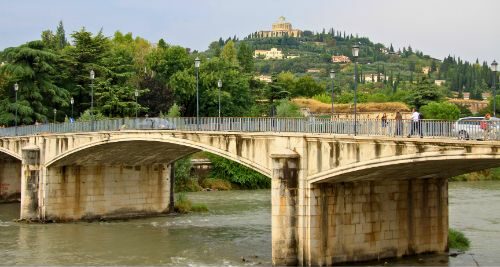
Many of the bridges that now span the Adige – such as Ponte della Vittoria, Ponte Risorgimento and Ponte Garibaldi – were built during this very period, often in the wake of the destruction of the Second World War and the need to rapidly rebuild essential urban links. Reinforced concrete thus became the symbolic material of a new era: more functional, rational and linked to modern mobility.
The bridges therefore reveal a different side to Verona: not just romantic and monumental, but also technical, urban and functional. They are perfect spots for those who love photographing geometries, perspectives, materials and the contrasts between the ancient and the modern. Walking along the Adige, you can catch some very distinctive views: on one side, historic architecture; on the other, more modern, essential and structural elements. It is precisely this contrast – also visible in the variety of forms and engineering solutions of the bridges – that makes the itinerary so interesting.
To find out more and follow the complete itinerary along the river, you can download the brochure dedicated to Verona’s bridges: 👉 Download the brochure “Verona’s Bridges”
An unusual itinerary
This route is ideal for those who want to discover a less touristy but no less ‘authentic’ side of the city. You can start from Corso Porta Nuova, an elegant and strategic boulevard linking the station to the historic centre: here it is worth slowing down to admire the 20th-century buildings, starting with the Chamber of Commerce.
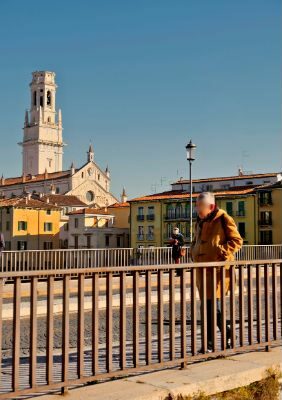
From here, continue towards Piazza Bra, leaving the more recent architecture behind as you gradually enter historic Verona. As you cross the city centre – perhaps via Via Mazzini or heading towards Piazza delle Erbe – you can clearly sense the transition between different eras, between monumental spaces and the more everyday urban fabric.
The route then continues towards the Adige: you can head down towards Ponte della Vittoria or carry on as far as Ponte Garibaldi, two significant examples of 20th-century architecture. Walking along the riverbanks, between the promenade and panoramic views, a different perspective on the city opens up, defined by clean lines, infrastructure and the urban landscape.
It is a short itinerary, suitable for a half-day, yet rich in inspiration: perfect for enthusiasts of architecture, urban photography, or simply for those seeking something different from the usual sightseeing tour. You do not need to be an architecture expert to appreciate it: simply let yourself be guided by the details, the materials, the lines of the buildings, and the way in which the modern fits into an ancient city.
Villa Girasole: the city’s real gem
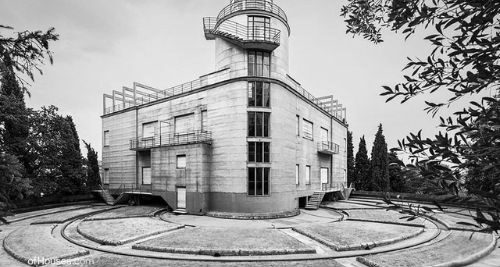
If, on the other hand, you wish to venture a little way out of the city centre and into the countryside, amongst the hills of Marcellise, you can discover a building that is unique in the world of architecture: Villa Girasole. Built between 1929 and 1935, this futuristic residence is famous for a feature that still makes it an international case study today: it rotates on its axis to follow the sun.
The project was conceived by the engineer and inventor Angelo Invernizzi, a great enthusiast of technology and innovation. With the support of the architect Ettore Fagiuoli and other collaborators, Invernizzi sought to create a house capable of moving like a sunflower, to ensure maximum exposure to the sun throughout the day. Hence the name ‘Villa Girasole’ (“Sunflower Villa”).
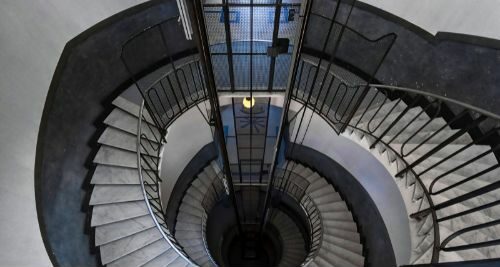
The structure consists of a fixed tower-shaped base and an L-shaped residential block resting on a circular ring. The mechanical system, powered by electric motors, enables the villa to complete a full 360-degree rotation in 9 hours, allowing every room to receive sunlight at different times of the day. An idea that today aligns with bio-architecture, but which was revolutionary at the time.
From an architectural perspective, Villa Girasole is a synthesis of styles: Futurist influences, Rationalism, Art Deco and engineering concepts blend into an original and striking design.
The interiors, which also feature many innovative details for the time, demonstrate a meticulous attention to functionality and comfort.
The villa is located approximately 12 km from the DB Hotel Verona Airport Congress & Spa, a 20–25-minute drive away, travelling through the eastern part of the city and up towards the hills of Marcellise.
For up-to-date information on visits and opening times, please visit the official website:
Verona, a city to see with fresh eyes
Verona’s beauty lies not only in its most famous monuments, but also in its contrasts: ancient stone and concrete, historic palaces and modern architecture, romantic views and urban geometry.
Discovering this lesser-known side of Verona means getting a more complete picture of the city, going beyond the traditional image of Romeo and Juliet. For guests staying at the DB Hotel Verona Airport Congress & Spa, this itinerary offers an original way to experience the city from a different perspective, taking in the historic centre, modern architecture and unusual spots.
👉 Find out more and plan your stay with our special offers: DB Hotel Verona Airport Congress & Spa

